





 Montreal, QC, Canada
 M-F: 9:30AM – 4:30PM, No holidays





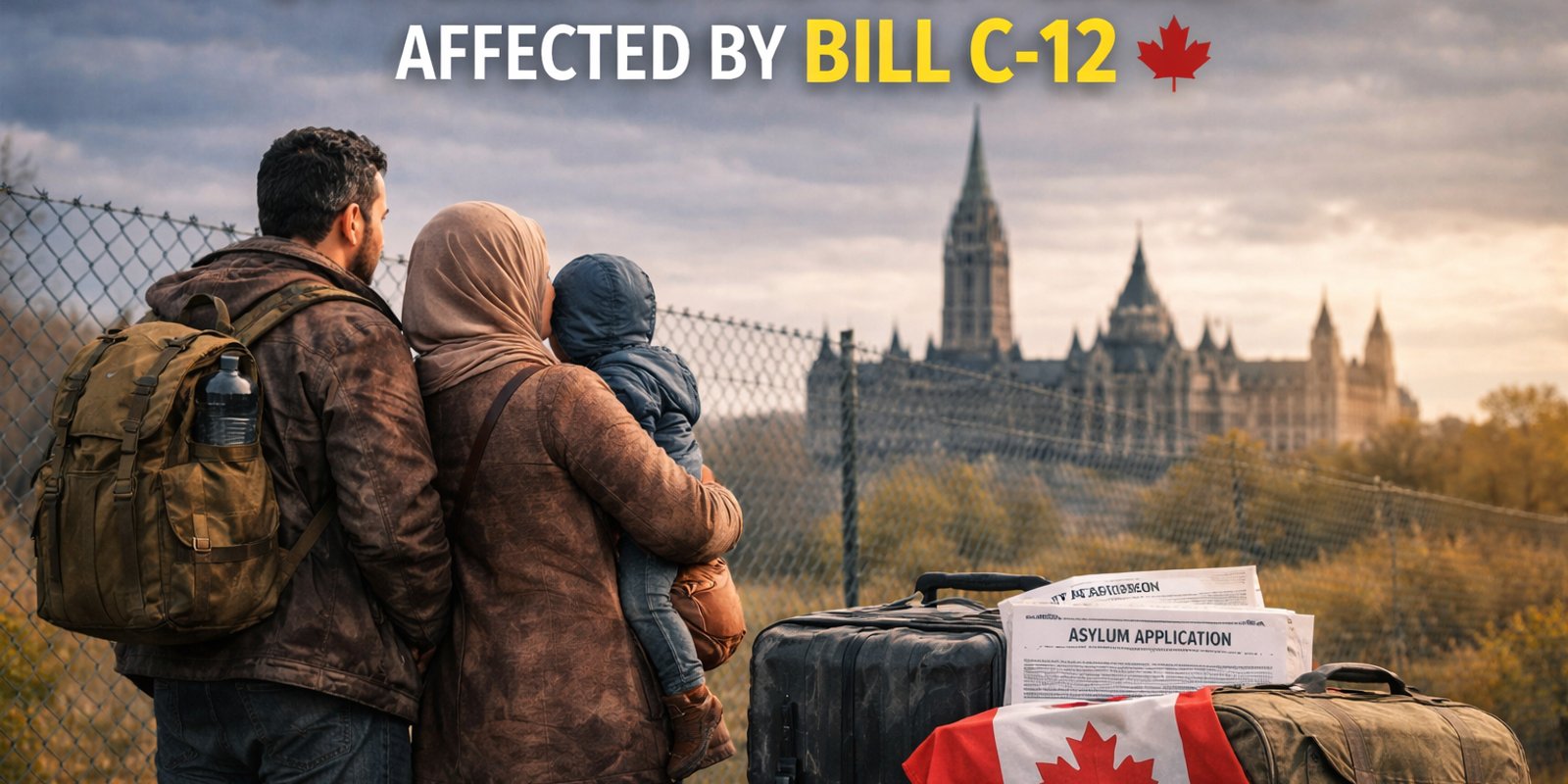

Bill C-12 passed third reading in the Senate on March 12, 2026, and, following
amendments, has been sent back to the House of Commons for final consideration before
Royal Assent. The bill introduces stricter timelines for asylum claims, affecting thousands
of people across Canada. If you entered the country after June 24, 2020, and waited more
than a year to file your claim, you may be found ineligible for a hearing before the
Immigration and Refugee Board. While this closes the door on the standard refugee
process, it does not mean your options have run out. There are still legal pathways you can
pursue to remain in Canada.
How the New Asylum Rules Work
The asylum system changes in Bill C-12 represent some of the most significant reforms to
refugee processing in Canada's recent history. These changes introduce strict timelines that
determine whether a person can access a full hearing before the Immigration and Refugee
Board or must use an alternative pathway.
The One Year Rule
If you entered Canada after June 24, 2020, you are required to file your refugee claim
within one year of your arrival. If you wait longer than that, you may be ineligible for a
standard Immigration and Refugee Board hearing. Immigration Minister Lena Metlege Diab
told the Senate that about 37 percent of claims filed between June and October 2025 will be
affected by this rule. That works out to roughly 19,000 out of 50,000 applications. To avoid
being declared ineligible, you need to act quickly and submit your claim before the one-
year deadline passes.
The 14 Day Rule
If you crossed the land border outside a port of entry, you may be required to file your
refugee claim within a limited timeframe, which can be as short as 14 days from your
arrival. This deadline applies to irregular border crossings and reflects a recent change to
the Safe Third Country Agreement. Previously, people who entered this way had more time
to submit their applications. This flexibility is no longer available. If you miss the 14-day
deadline, you may be found ineligible for a hearing and may face removal. To protect your
right to claim asylum, you should gather your documents and file your application as soon
as possible after entering Canada.
What Happens If You Miss the Deadline
Missing the deadline has serious consequences. Your refugee claim will not go through the
normal process. Immigration officers may determine that you are ineligible. You will not
get a chance to present your case before a judge, and in most cases, there is no right of
appeal. Once you are found ineligible, the Canada Border Services Agency can start removal
proceedings. This puts you at risk of being sent back unless you act quickly.
Option 1: Pre-Removal Risk Assessment
The Pre-Removal Risk Assessment (PRRA) is the main alternative Bill C-12 offers to people
who are ineligible for a standard claim. It serves as an alternative protection mechanism
prior to removal. You submit a written application explaining the dangers you would face if
returned to your home country. You need strong evidence, such as police reports, medical
records, or expert letters. An officer reviews your case on paper without a live hearing. If
approved, you become a protected person and can stay in Canada. But approval rates are
low because the process is document-based and happens under tight time pressure.
Option 2: Humanitarian and Compassionate Grounds
Applying on Humanitarian and Compassionate (H&C) grounds is another route. This option
is not based on fear of persecution. Instead, it focuses on the hardship you would face if
forced to leave Canada. Decision-makers look at how established you are here. Do you have
a job? Are your children in school? Do you volunteer in your community? They also
consider family ties and health issues. If approved, you can apply for permanent residency
from inside Canada. But there is a major drawback. An H&C application does not
automatically prevent removal, unless a stay is granted. You can be removed while your
application is still being reviewed unless you get a separate court order to stay.
Option 3: Judicial Review
If your eligibility decision or PRRA is denied, you can ask the Federal Court to review it.
This is called a judicial review. You are not asking the court to re-decide your case. You are
arguing that the immigration officer made a legal error. For example, the officer may have
ignored important evidence or misunderstood the law. Legal representation is strongly
recommended. If the court agrees with you, it sends the case back for reconsideration.
Judicial review does not guarantee success, but it can buy you time and give you another
chance.
Moving Forward After Ineligibility
Bill C-12 has made it much harder for people who wait too long to claim asylum. But even if
you are found ineligible, you still have options. The PRRA, H&C application, and judicial
review are all legal pathways you can explore. Each one has its own requirements and
risks. It is important to act fast and get legal advice as soon as possible. The earlier you
start, the better your chances of staying safely in Canada.
How MTK Immigration Services Can Help
Navigating the complexities of Bill C-12 requires expert guidance, and that is where MTK
Immigration Services comes in. We understand the challenges asylum seekers face under
these new rules. Time is critical under Bill C-12, and acting quickly can make the difference
between staying in Canada and facing removal. Contact MTK Immigration Services today
for a consultation and let us help you explore all available options to secure your future in
Canada.